

Cultivating uncertainty
Why you should seek out opportunities to figure things out for yourself

I just finished Haruki Murakami’s surreal and haunting novel The City and Its Uncertain Walls, and I’m still kind of reeling. If you’re fond of the way Murakami, using simple, everyday language, can create a completely convincing world where you’re never quite sure if what you’re seeing is real, put this one on your TBR list.
At the beginning of the story, the main character—whose name we never learn—falls deeply in love with a girl when he’s a teenager, and very soon he finds out she’s the same sort of imaginative, dreamy soul he is. One day, as they’re sitting on a blanket in the sun, she tells him about a city with a high wall that is somehow more real to her than the actual world around her:
As you spoke, the town revealed a single lovely river and three stone bridges (the East Bridge, the Old Bridge, and the West Bridge), a library and a watchtower, an abandoned foundry and communal housing. In the faint light as twilight drew near, we sat shoulder to shoulder, gazing at that town. At times we were on a far-off hill our eyes narrowed; at other times, the town was so close that we could reach out and touch it, with our eyes wide open.
“The real me lives there, in that town surrounded by a wall,” you said.
“So the you that is sitting here next to me isn’t the real you?” I had to ask.
“That’s right. The me here with you now isn’t the real me. It’s only a stand-in. Like a wandering shadow.”
Over the following year, they create between them more and more of the city’s geography, history, and inhabitants. Peculiar features arise. The watchtower, for example, has a clock—but the clock has no hands. There’s a Gatekeeper who is the only one allowed to leave the city; once you enter it, you have to give up your shadow, which means you can never leave again.
Talking about the city becomes the focal point of their relationship. And all along, she insists that they aren’t creating it; they are merely describing something that already exists, that in fact is more real than this world. One day, she tells him, she will find her way there, her shadow-self rejoining her real-self in the city with the high wall.
And then, one day, she disappears.
Letters from him go unanswered. A phone call results in his being told the number is no longer in service. He goes to the house to which he’d walked her home dozens of times, to find that a family lives there who has no daughter.
I won’t spoil it by giving away more of the story, because the way it unfolds has the magical character of a modern myth. But I will warn you: if you want neatly tied-up endings, look for a different book. The central questions of the story—is the main character an unreliable narrator? Does the city with the high wall have an external reality? What’s the meaning of the clock with no hands and the fact that no one in the city has a shadow? Does the girl herself even exist?—are never resolved explicitly.
You have to decide what the answers are for yourself.
This kind of ending drives some people crazy. Me, I love it. It’s the kind of story that stays with you, rather than just handing you the whole thing tied up in a tidy package with a ribbon on top. It keeps you working at it, trying to put the pieces of the puzzle together. All the clues are there, it seems to say to the reader. You’re smart enough to figure this out.
It’s why one of my very favorite Doctor Who episodes in recent years is the haunting “73 Yards.” The Doctor’s companion Ruby is being followed by an old woman who always stays exactly 73 yards away from her, making enigmatic hand gestures. Ruby, of course, can’t get close to her, but anyone else who approaches the old woman and speaks to her ends up terrified, running away in fear—and then turns against Ruby, refusing to have anything more to do with her, as if the old woman had revealed some kind of dreadful secret about her. (In two horrifying scenes, this includes the stalwart Kate Lethbridge-Stewart, and Ruby’s own mother.) We get hints at the end of who the old woman is and what’s going on, but it’s never really resolved completely; certainly, we never see the whole picture.
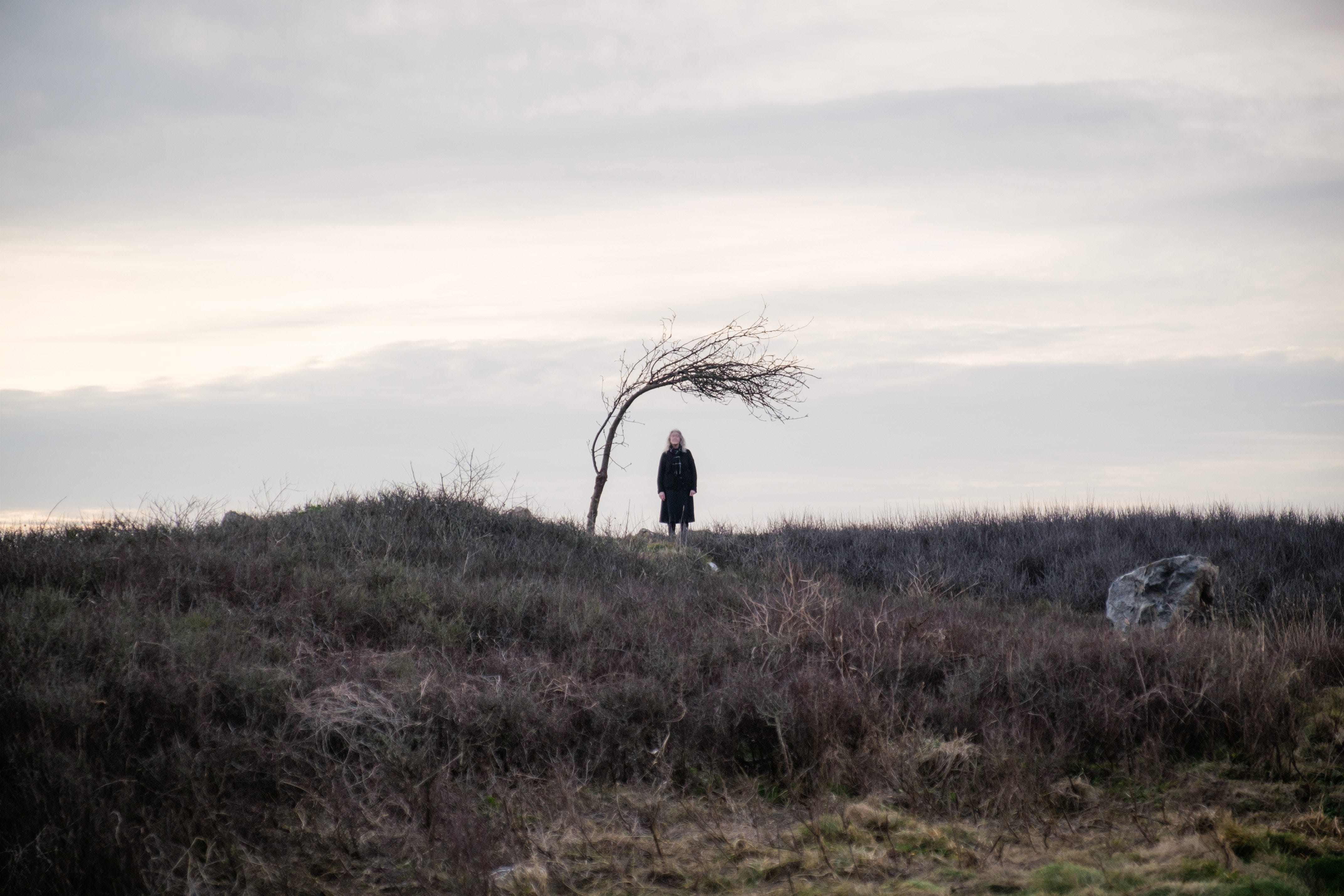
It’s creepy, unsettling... but also brilliantly plotted and deeply intriguing.
One of the most critical things for developing an understanding of how things work is a tolerance for uncertainty. The rush to find an answer—any answer—is completely antithetical to true knowledge. On one level, I get it; it’d be nice if things were simple. It’d all be so much less trouble. But the basis of curiosity is in the suspension of that tendency, of allowing yourself not to know for a while, but to think, “Okay, I can do this. Let’s see how this all works.”
The drive to fill in the answer blank and be done with thinking is a large part of what’s gotten us into the political situation we now have in the United States. It’s the “All we have to do is...” mentality. All we have to do is... put tariffs on other countries, and industry will come roaring back to our own. Get rid of all the illegal immigrants, and our streets will be safer. Attack Iran, and everyone in the world will be on our side. Cut the size of government, and waste and fraud will magically disappear. Believe what Donald Trump says, world without end, amen.
And it’s fed by the talking heads on the news, too, who give us little bite-sized pieces, nice and manageable—and due to our tendency to gravitate toward the media we already believed, nothing that’ll challenge our preconceived notions. Nothing that forces us to question.
Nothing that says, “Here are the actual facts. Now, put them together. You don’t need me to tell you what to believe, you’re smart enough to find the answer yourself.”
Psychologist Todd Kashdan said, “If we are interested in producing a population of critical thinkers armed with courage, resilience, and a love of learning and discovery, then we must recognize, harness, and cultivate curiosity.” But the flipside of that is if you want to produce a population of people who will blindly follow an amoral autocrat, who will swallow every last bit of party-line propaganda from his mouthpieces, then make them incurious, unquestioning, and the unable to sustain uncertainty.
The frightening truth is that the last thing our current elected leaders want is a populace made up of people who ask uncomfortable questions, who probe deeper, who tolerate ambiguity, who examine their own biases and those of the people they meet. No, they want followers who’ll wear a gold pin with Donald Trump’s face on it. It’s easy to get scared people to fall for hero worship—and scared people are far more susceptible to bullying by the greedy and power-hungry.
I get that we live in uncertain times, and as someone who has had a lifelong struggle with anxiety and depression, no one knows better than me how uncertainty can provoke fear. But I’m asking you to hold that fear in your hands for a while. Examine it and be curious about it. Ask it questions. Find out about your biases—we’ve all got them, but they’re not dangerous as long as you keep them where you can see them. This approach may not be as instantly gratifying as having Fox News tell you, “Here’s what to think,” but in the end, it’ll be worth it.
Believe me about this much, at least; in the final tally, a deep understanding is worth the anguish of being in the dark for a while.
Be brave. I trust you to figure the answers out.
There is a Bowie song with an audio clip: "I don't want knowledge! I want certainty!" The ability to hold many pieces of information in mind at once and consider what explanations may include them all and can also be probable is sorely lacking in people raised with screens and multiple choice quizzes. Everyone wants to think faster, not better.